
Article Summary
- Parquet is hardwood laid in geometric patterns (herringbone, chevron, basketweave, and custom layouts).
- Solid and engineered parquet both work; the right choice depends on subfloor, moisture, and how many times you may refinish later.
- Pattern work needs flat subfloors, careful layout, and often glue-down install for a tight, lasting field.
- In Greater Tulsa homes, humidity control and species selection matter as much as the pattern photo you fall in love with.
- Mayo Bros installs unfinished, prefinished, floating, glue-down, and parquet floors, plus borders and special patterns.
- Skip DIY on complex patterns unless you already lay floors for a living; layout mistakes show forever in the room.
If you want a floor with real character, not just another straight plank run, parquet is one of the strongest ways to do it well.
What parquet flooring is
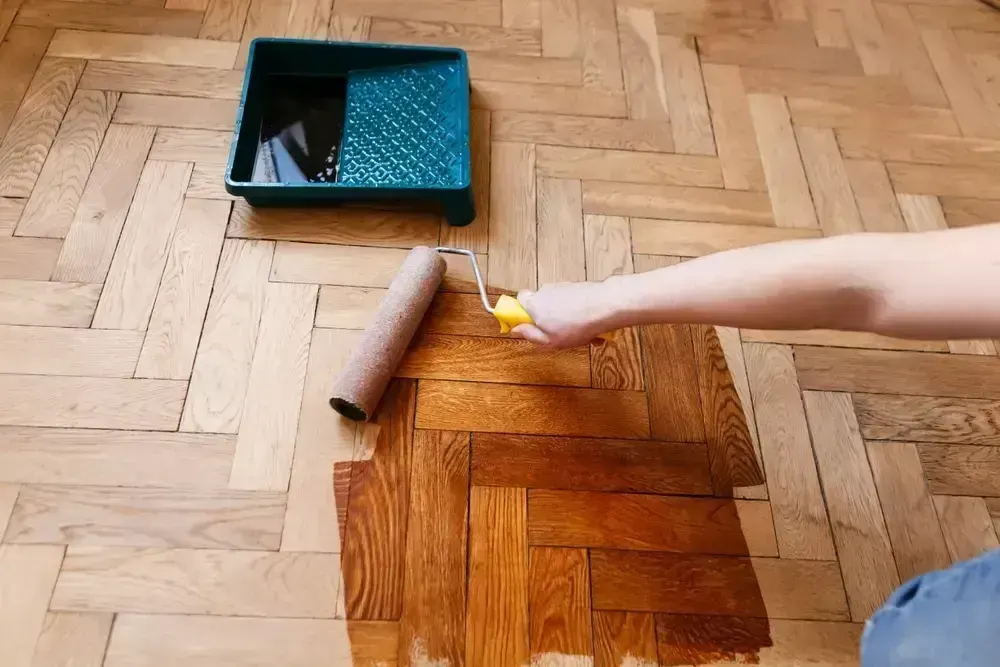
Parquet is wood flooring arranged in repeating geometric blocks or strips. Instead of long boards running one direction, small pieces form a pattern across the room.
Homeowners often mean herringbone or chevron when they say “parquet,” but the family is broader: basketweave, Versailles-style panels, borders, medallions, and custom mixes with straight plank fields.
- ✓Pattern first
The design is the product, not only the species.
- ✓Real wood
We work with wood systems you can live on for decades, not laminate lookalikes.
- ✓Showpiece rooms
Entries, dining rooms, great rooms, and open plans benefit most.
Pro tip: Bring a photo of the pattern you like, plus a rough room size and subfloor type (slab, plywood, existing wood). That trio lets us talk real install method before you buy material.
Solid vs engineered parquet
Both can look excellent. The decision is about the structure under the finish, not which one “looks more real.”
| Factor | Solid parquet | Engineered parquet |
|---|---|---|
| Construction | Pieces cut from solid timber | Real wood wear layer over a stable core |
| Subfloor flexibility | Best on well-prepared wood subfloors | Often more options on slabs with the right system |
| Refinish life | More sanding cycles when thickness allows | Limited by wear-layer thickness |
| Movement | More reactive to humidity swings | Generally more dimensionally stable |
| Pattern options | Classic blocks and site-laid patterns | Prefinished modules and glue-down systems |
We do not invent a single “best” product online. Moisture readings, subfloor condition, and your long-term plan decide the path.
Popular patterns that still work
Classic patterns stay popular because they read as intentional design, not a trend sticker.
- Herringbone — zigzag blocks; warm and traditional, works in many oak and walnut tones.
- Chevron — points meet in a continuous V; cleaner, more formal lines than herringbone.
- Basketweave — woven squares and rectangles; softer visual rhythm.
- Borders and medallions — frame a room or create a centerpiece under a dining table or entry.
On jobs where we mix patterns with straight plank fields, layout lines and expansion gaps have to be planned early. That is normal specialty work for our crew, not a weekend experiment.
A good parquet floor looks like it was designed with the room. A bad one looks like a pattern dropped on the house.
How we install parquet
Pattern floors reward patience. Rush the substrate and the whole field telegraphs waves or open joints later.
- Evaluate the space — measure, check moisture, confirm species and pattern direction relative to light and main traffic.
- Prepare the subfloor — flat, clean, dry, and ready for the chosen system (often glue-down for tight pattern fields).
- Acclimate material — let product settle to jobsite conditions before layout.
- Snap layout lines — establish centerlines so the pattern balances walls, openings, and transitions.
- Install the field — set pieces or modules to line, control glue open time, and keep joints tight.
- Sand and finish (when unfinished) — blend the field, then stain and topcoat for a single continuous surface.
- Protect and hand off — cure times, felt pads, and simple care instructions so the floor starts life clean.
Pro tip: Prefinished pattern systems can be ready sooner after install. Unfinished site-finished parquet usually needs more days for sanding and coats, but it delivers a seamless custom look. We will tell you which timeline fits your remodel schedule.
See our full process and related work on the parquet and custom wood floors service page, or compare with standard hardwood floor installation.
What affects scope and cost
We do not publish bait prices. These factors usually move the estimate:
- 1Pattern complexity
Herringbone is different work than a medallion with borders.
- 2Room shape
Many cuts, angles, and transitions add labor.
- 3Subfloor work
Leveling, moisture mitigation, and old floor removal change the job.
- 4Finish path
Unfinished site finish vs prefinished modules.
- 5Species and grade
Oak, walnut, maple, and mixed borders each behave differently.
For a clear number, request a free quote or call 918-810-4844 with photos and room dimensions.
Care and refinishing
Parquet is still wood. Treat it like a quality hardwood floor, not a disposable surface.
- Dry dust or soft sweep regularly; damp mop lightly with a wood-safe cleaner.
- Use pads under furniture and avoid rolling chairs on soft casters that dig in.
- Keep indoor humidity in a stable range so joints stay quiet.
- When the finish dulls, a buff and recoat may restore sheen if wear has not cut through the finish.
- When scratches, cupping history, or worn finish demand more, plan a proper hardwood floor refinishing after we check wear layer and pattern thickness.
Is parquet right for your home?
Choose parquet when you want the floor to carry the design of the room. Choose straight plank when you want a calmer field or a simpler budget path.
| Situation | Better direction |
|---|---|
| Entry or dining room you want to feel special | Parquet or border work |
| Whole-house remodel with tight timeline | Prefinished pattern system or straight plank |
| Existing solid oak you love, just tired finish | Refinish existing floors first |
| Slab with moisture concerns | Engineered system after moisture plan |
| Historic or traditional interior | Herringbone, chevron, or basketweave |
Next step
Ready to talk pattern, species, and install method for your home? Our crew installs parquet and custom patterns across Greater Tulsa.
Parquet flooring FAQs
Is parquet flooring too formal for a normal family home?
No. Pattern scale, species, and stain tone set the mood. A mid-tone oak herringbone can feel warm and livable, not museum-stiff.
Can I install parquet myself?
Simple modular products exist, but most true pattern work needs professional layout. A crooked starting line multiplies across the whole room. We recommend a pro for glue-down herringbone, chevron, borders, and medallions.
Does parquet work with pets and kids?
Yes with the right finish and habits. Trim nails, use mats at doors, and clean grit. Pattern does not make wood softer or harder; finish and species matter more for daily wear.
How often do parquet floors need refinishing?
It depends on traffic, pets, and maintenance. Many homes go years between major sand-and-finish cycles. A midlife buff and recoat can stretch the life of a good finish when the wood is still sound.
Can you match parquet to existing wood floors?
Often we can blend species, stain, and transitions so a patterned room sits well next to straight plank halls. Exact mill-run matches are not always possible on older floors; we will show options on site.
Do you install parquet outside Tulsa city limits?
Yes. We serve Greater Tulsa and outlying communities. Start with our service area pages or call 918-810-4844 to confirm your address.